
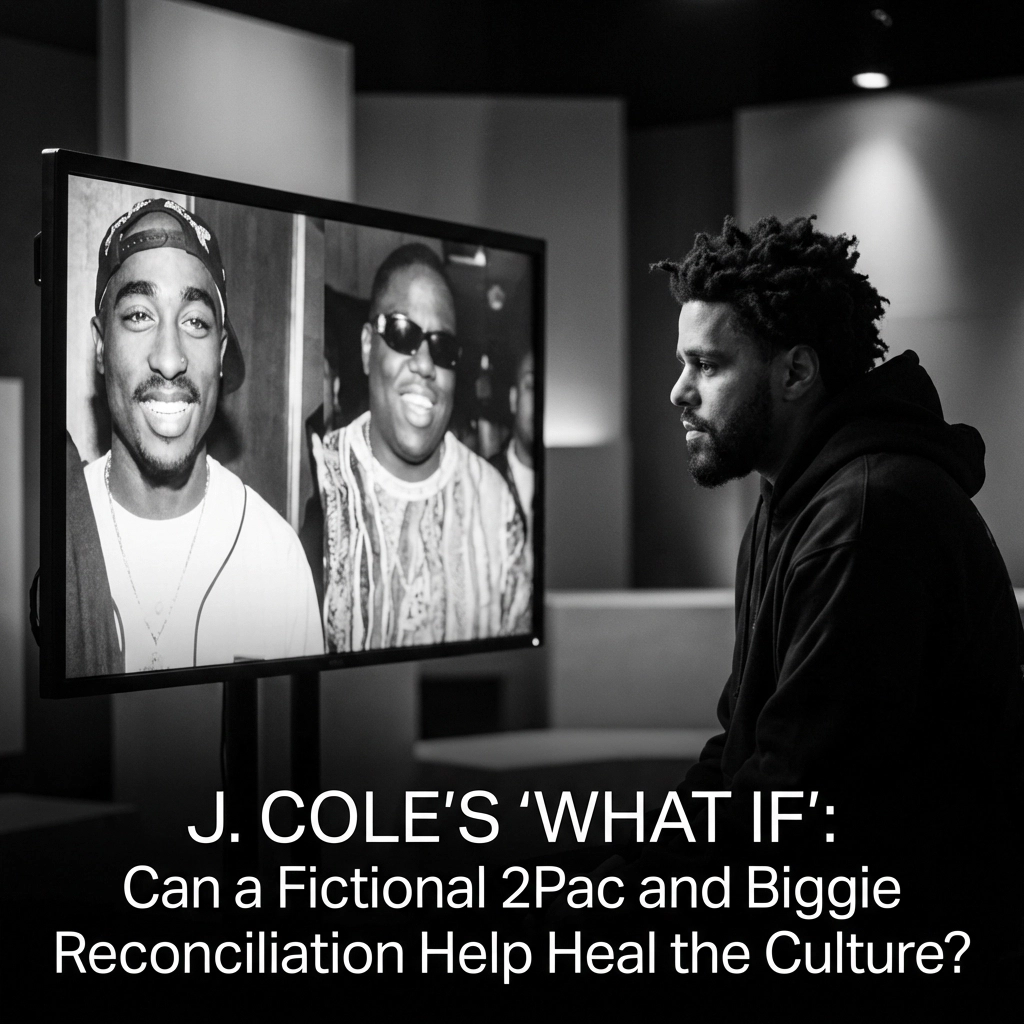
I gotta ask a question: why would J. Cole put Pac and Biggie in a fake peace talk in 2026?
Because we still don’t know how to pick unity over entertainment, and that “division” package stays selling out like it’s a limited-edition drop.
I’m Kalum, and I’ve been stuck on what Cole just did on The Fall-Off because it’s funny, it’s bold, and it’s lowkey a lesson wrapped in rap.
Cole dropped a track called “What If” where he raps like 2Pac and Biggie, from both perspectives, and he has them apologize and basically squash it. And yeah, I already hear the comment section warming up like “don’t play with the legends.” But here’s the reason this scenario keeps pulling us back in: because we never got closure, and the lack of closure keeps turning into the same old division—just with new names.
What Cole is really doing (and why it’s got people arguing)
Cole’s “What If” is a fantasy peace summit. He steps into Pac first—talking ego, pressure, outsiders in the mix—then flips into Big to show regret about how everything spiraled after Quad Studios, when Pac got shot and felt like folks close to him knew something.
Why make it a “Pac and Big sit-down” story at all?
Because in our community, beefs don’t stay personal. They become regional, then tribal, then everybody-pick-a-side—and next thing you know, people who don’t even know each other are ready to crash out on behalf of a logo, a neighborhood, a coast, a timeline, or a favorite rapper. Cole is using the biggest “we never fixed this” moment in hip hop to ask: what would it look like if we chose resolution before the internet (and the streets) chose violence for us?
That’s the “why.” It’s not just nostalgia. It’s a warning label.
The real “why” behind the Pac/Big tragedy: division is profitable
Let’s keep it simple: Pac vs. Big wasn’t just rap. It was paranoia, industry games, street politics, and a whole lot of people who benefited from the confusion.
And that’s why some listeners call Cole’s version “too clean.” Because real life was messy:
- Pac’s situation wasn’t only Big. It included labels, entourages, media narratives, and street-adjacent pressure that kept feeding the fire.
- The beef turned into a coast-versus-coast brand, and brands don’t make money off peace. They make money off spectacle.
Why does that matter in 2026? Because the same playbook still exists:
- Conflict sells.
- Outrage trends.
- And Black pain gets packaged like content.
So when Cole makes Pac and Big apologize, he’s basically saying: what if we stopped letting outside incentives and inside pride turn us into our own worst enemy?
The Kendrick shadow: why people think Cole is “explaining himself”
Now here’s the funny part (funny like “ain’t this convenient?”): Cole’s coming off that Kendrick situation where he dropped a diss, then apologized and pulled it back—splitting the culture. Some people saw maturity. Others saw a retreat.
So when he drops a song about two icons making peace, folks are like: “Oh… so this is the PowerPoint presentation for your apology.”
And I get why people think that. The “why” behind that reaction is simple:
- Hip hop fans don’t just judge music; they judge motive.
- And when you use Pac and Big, you’re touching something sacred—so people demand extra honesty.
But even if Cole is processing his own moment through their story, that doesn’t automatically make the message useless. It just means we should separate two questions:
- Is the art effective?
- Is the intention clean?
Both can be debated.
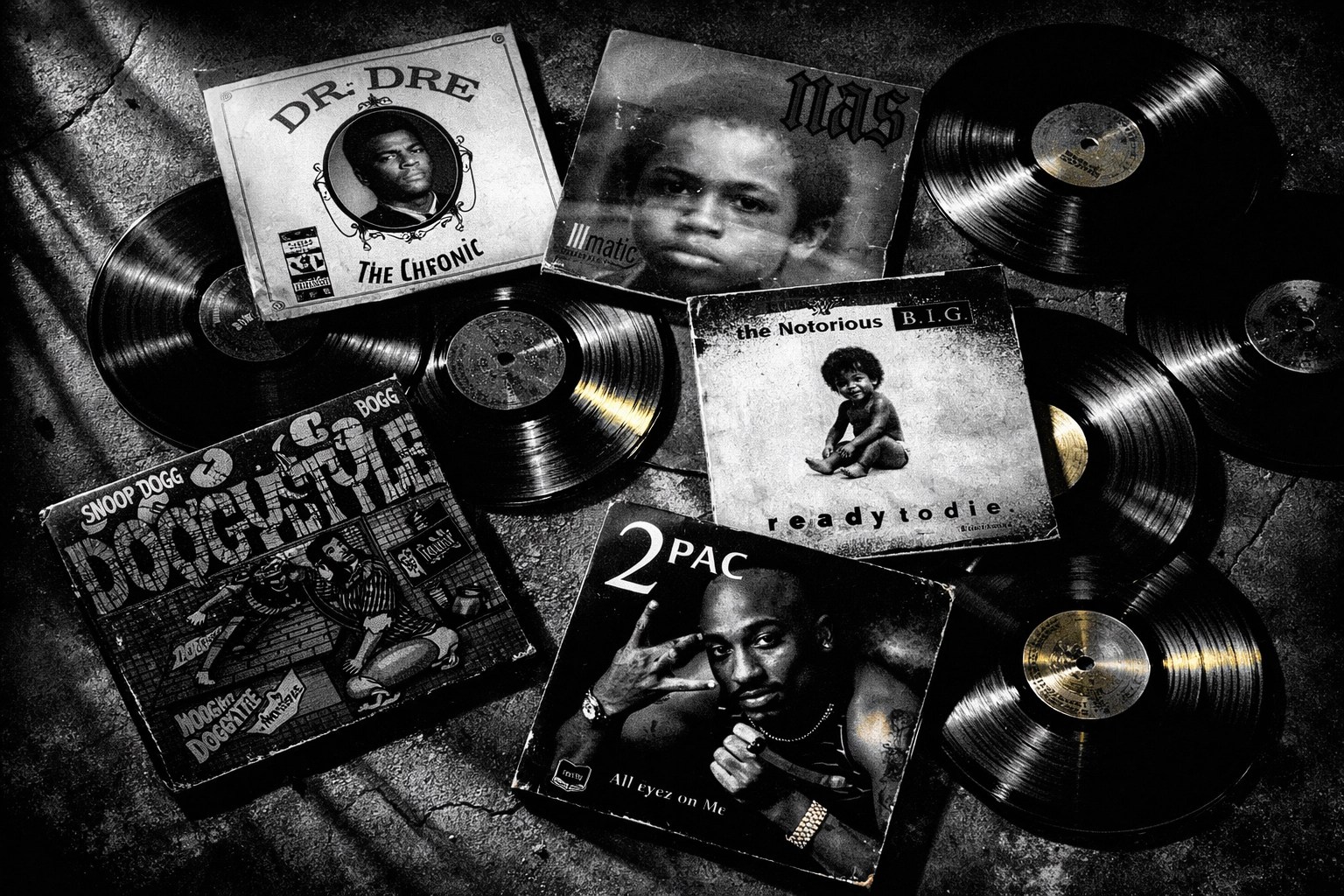
Why we keep replaying this story: because we’re still bleeding from it
I don’t think we talk about Pac and Big like history. We talk about them like an open tab in the browser we never closed.
Why?
- Because their deaths didn’t just take two artists. They took possibility.
- They took the chance for two Black men with massive influence to show the world what reconciliation looks like when the whole crowd is begging for war.
And when that chance died, a message quietly moved in and posted up:
“This is how it always ends.”
Cole is trying to rewrite that message for a new generation—especially younger listeners who only know the story through clips and docs. The “why” here is bigger than rap: if we can imagine the sit-down, we can practice the sit-down.
Unity isn’t a hashtag—it's leverage (and we’ve seen it)
Let me say it plain: unity isn’t just “good vibes.” Unity is leverage. It’s the group discount. It’s the “run me my respect” receipt.
Our community’s power is real, but it gets watered down when we stay divided—regionally, generationally, ideologically, and even musically. The “why” behind unity is not “Kumbaya.” It’s math:
- Unity = bargaining power.
- Division = being easy to manage, market to, and ignore.
When we’re fractured, it’s easier for systems to do what they always do:
- underfund our schools,
- over-police our neighborhoods,
- dismiss our demands,
- then hand us a trending topic to fight about while decisions get made.
So yeah, a Pac/Big reconciliation fantasy matters because it reminds me: we can disagree without self-destructing. And if I can practice that in culture, I can practice it in real life—where the consequences are way more serious than a rap debate.
So is it Cole’s place?
This is the part where I’m not gonna play tough for the internet.
Is it risky for Cole to “voice” Pac and Big? Yes.
Why? Because they can’t consent, correct, or clarify. Their legacies are not action figures you pose for your storyline.
But I also won’t pretend storytelling doesn’t have value.
Why? Because sometimes a “what if” is the only way to get people to ask the real question:
- Why did we accept division as normal in the first place?
- Who benefited from it then?
- Who benefits from it now?
- And what would we be able to build if we stopped doing that to ourselves?
Where I land (and how it comes full circle)
To me, “What If” is not a history lesson. It’s a mirror.
If you love it, you’re probably craving closure and a blueprint for accountability.
If you hate it, you’re probably protecting the dead from being used as a prop.
Both instincts make sense.
But the bigger point I don’t want us to miss is the “why” behind the whole debate: division is profitable for other people. It keeps attention on the beef, not the blueprint. It keeps us loud, split, and predictable—easy to market to, easy to ignore.
And that’s why Cole’s little “Pac and Big sit down and talk it out” fantasy hits nerve endings. Because it’s basically asking us: what if we stopped being the product and started being the power? The moment we move like a unit, unity turns into bargaining power—and now folks gotta negotiate instead of just narrate our problems.
So I’ll end where I started: why would J. Cole do this “What If” at all?
Because whether it’s rap, money, or policy, the people who benefit from our division don’t want us practicing unity. And even a fictional peace talk can remind me that unity is a choice—one that comes with leverage.
What do you think—does Cole’s “What If” push the culture toward resolution, or does it cross a line using Pac and Big’s names? Tap in at PolitiKan Broadcasting if you’re trying to keep the convo honest: culture, consequences, and how we turn unity into real bargaining power.
Leave a Reply