
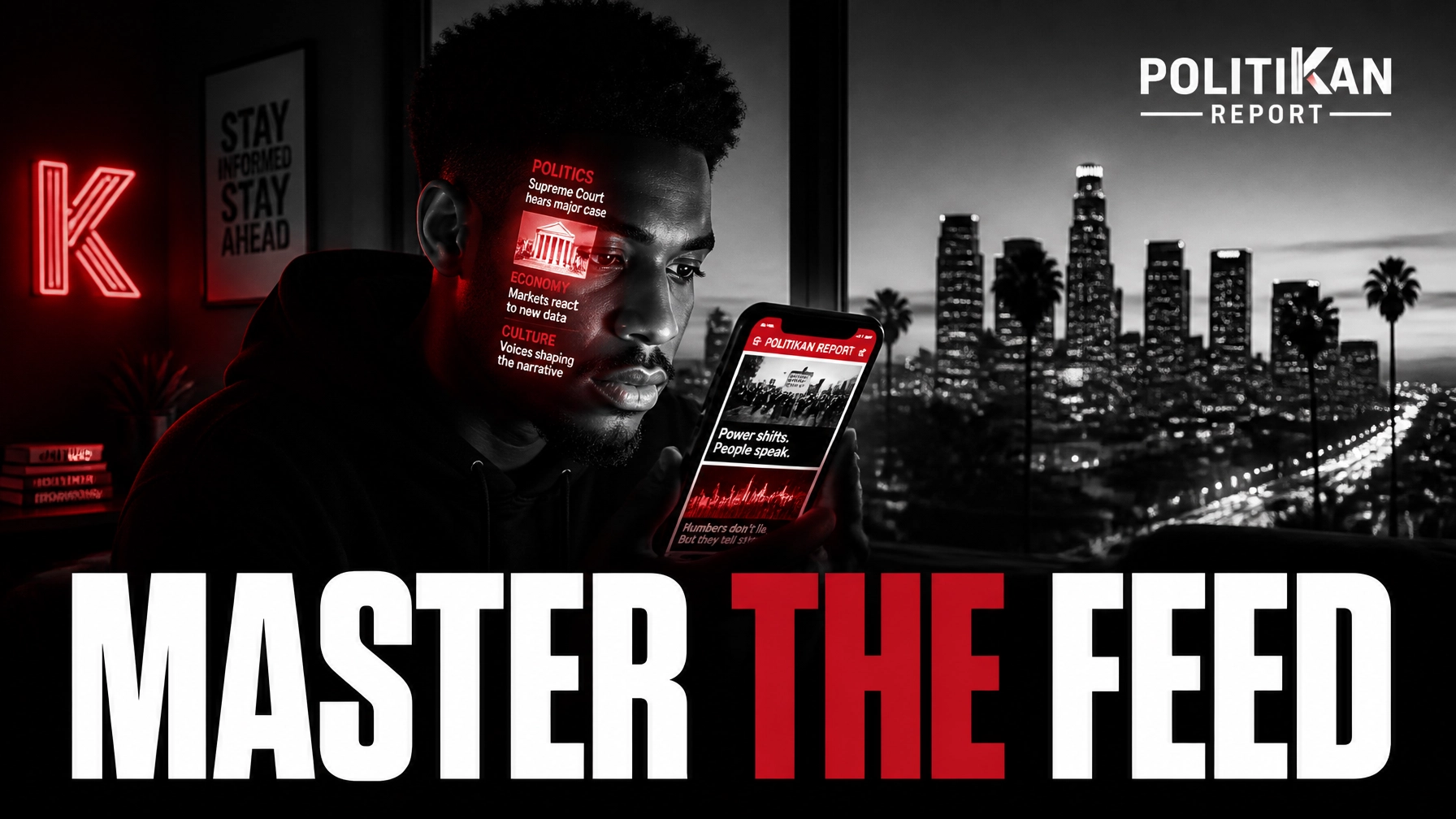
Why does it feel like your brain is playing a high-stakes game of Tetris every time you open your phone after work?
I’ve been there. It’s 7:00 PM. You just got the shoes off, the takeout is on the way, and you finally have a second to breathe. You tap that screen, and suddenly, you’re hit with a 24-car pileup of information. One minute you’re watching a hilarious clip on Grindface TV, the next you’re seeing a heartbreaking report on ABC7 LA about a local eviction, and before you can process that, ESPN is screaming at you about who the "GOAT" is after a Game 4 blowout.
It’s a lot, family. We live in an era where information is coming at us faster than a Kendrick Lamar verse on a diss track, but half of it is just noise. If you aren't careful, the "feed" will feed on you. That’s why I’m breaking down the ultimate guide to mastering your daily news cycle. We’re going to look at the big six: Grindface, WorldStar, CNN, ABC7, The Source, and ESPN: and talk about how to extract the juice without getting lost in the sauce.
The Grindface & WorldStar Gauntlet: Viral vs. Vital
Let’s keep it 100: WorldStarHipHop and Grindface TV are the modern-day town squares of the digital age. If something happens in the streets: whether it’s a legendary freestyle or a chaotic sideshow in Compton: it’s going to land here first.
But here’s the "why" you need to understand: these platforms thrive on the "shock factor." Their incentive is engagement, not necessarily education. When I’m scrolling through Grindface at 7 PM, I’m looking for the pulse of the community, but I’m doing it with a filtered lens.
I use these sites to see what the youth are talking about and to catch those "you had to be there" cultural moments. However, I’ve learned that you can't let the negativity cycle drain your battery. For every viral fight video, there’s a deeper story about why our neighborhoods are feeling the pressure. I treat these platforms like a spicy appetizer: good for a quick taste of what’s happening "on the ground," but I never make them my main course for facts. If you want to master the feed, you have to know when to laugh at the meme and when to swipe past the trauma.
The Source: More Than Just a Five-Mic Rating
When I want to know what’s actually moving the needle in the music industry, I head over to The Source. Now, look, we all know the history. The "Five-Mic" rating used to be the Bible for hip hop. While the game has changed with streaming and TikTok, The Source still provides a level of institutional knowledge that a random tweet just can't match.
Why does this matter in 2026? Because hip hop is the most influential political tool we have. When you see coverage of the latest beef: like the legendary Kendrick and Drake saga that shook the foundations of the genre: you aren't just looking at two guys rapping. You’re looking at shifts in cultural power, ownership, and regional pride.
I check The Source to see how the industry is moving behind the scenes. Are labels still preying on independent artists? Which West Coast legends are getting their flowers? By the time 7 PM rolls around, the "news" about a new drop is already old, but the analysis of what that drop means for our community is just getting started.
ESPN & The Arena: Why the Scoreboard Always Matters

It’s May. You know what that means: NBA Playoff pressure. Whether it’s the Celtics trying to cement a legacy or the next generation of stars like Anthony Edwards and Luka Dončić taking over the throne, ESPN is the 7 PM destination.
But I don't just watch for the highlights. I watch for the narrative. Sports in the Black community have always been a mirror for our struggle and our excellence. When an ESPN analyst starts talking about "player empowerment," I’m listening to the subtext of labor rights and economic freedom.
If you're trying to master your feed, you have to look past the box score. Why is the media pushing certain stars while ignoring others? How does the energy of a Lakers game reflect the gentrification happening right outside the Crypto.com Arena? I use sports as a way to decompress, but I stay sharp enough to see how the "game" played on the court reflects the "game" being played in our society.
CNN & ABC7: Filtering the Mainstream for the Local Reality
Now, we have to talk about the "Big Box" news. At 7 PM, ABC7 LA is usually wrapping up its local broadcast, and CNN is revving up for prime time.
Here’s the thing: mainstream media has a history of looking at our community through a "crime and chaos" lens. If you only watch ABC7, you might think the only thing happening in South Central or Oakland is a police chase. That’s why I approach these sources with a healthy dose of skepticism.
I check ABC7 for the "what": what’s the weather, what’s the traffic, and what’s the latest policy being passed at City Hall? But I look to PolitiKan to understand the "so what." For example, if CNN is reporting on national election trends, I’m looking for how those trends specifically impact Black homeownership and criminal justice reform.
Mastering the feed means being your own editor. When you see a headline on CNN about "the economy," you have to ask: "Whose economy?" Is it the economy of the billionaire class, or is it the economy of the brother trying to start a small business in Leimert Park?
PolitiKan’s Secret Sauce: Curating Your Mental Health
I’ve realized that the reason we feel overwhelmed by the news isn't because there’s too much of it; it’s because we haven't learned how to curate it. Your attention is the most valuable currency you have. If you spend it all on "Crash Out" videos and biased political pundits, you’re going to end the day feeling bankrupt.
Here is how I do it:
- The 20-Minute Rule: I give myself 20 minutes to skim the "Big Six."
- Verify the Vibe: If I see something wild on WorldStar, I check a reputable hip hop outlet like The Source to see if there's any truth to it.
- Local First: I prioritize news that affects my immediate block. ABC7 is great for knowing if a freeway is closed, but I dig deeper into community blogs to see why the city is making those changes.
- Follow the Money: Whether it's the NFL or a local bill, I always look at who is getting paid. Incentives explain everything.
We started this conversation with a question: Why does it feel like your brain is playing Tetris at 7 PM?
The answer is simple: because you’re trying to fit every piece of information into your head exactly as it's being served to you. But you don't have to accept every block. You are the player, not the board. By choosing where you get your music news, how you consume sports narratives, and when you filter mainstream politics through an urban lens, you take control of the game.
Keep your head up, stay tapped in, and remember: if it’s happening in the culture, we’re talking about it here at PolitiKan.


Leave a Reply